

Why GreenPan?

Andi Healey
Web Manager
A Different Approach to Non-Stick
Essential Information
- What It Is: Thermolon ceramic coating made from sand-derived minerals instead of plastic-based PFAS chemicals
- Key Benefit: PFAS-free, won't release harmful fumes if overheated, produced with 60% less CO2 than traditional non-stick
- Perfect For: Health-conscious cooks seeking sustainable, high-performance non-stick cookware
- Care: Use low to medium heat, wash with warm soapy water, avoid spray oils, use soft utensils
- Environmental Impact: Recycled aluminium bodies, solar-powered manufacturing, wastewater treatment plant
Jump to Section
The Problem with Traditional Non-Stick
Traditional non-stick coatings are manufactured using PFAS (poly- and perfluoroalkyl substances) – synthetic chemicals that make cookware water-resistant, grease-resistant and provide the characteristic non-stick properties we're familiar with. These chemicals earned the nickname "forever chemicals" because they break down extremely slowly in the environment.
The concern extends beyond environmental persistence. During production, PFAS compounds enter our food chain and accumulate in human bodies. While research continues, increasing evidence suggests that individuals with high PFAS concentrations in their blood may face greater risks of impaired immune function and various health problems, including obesity, cardiovascular disease, fertility issues and cancer.
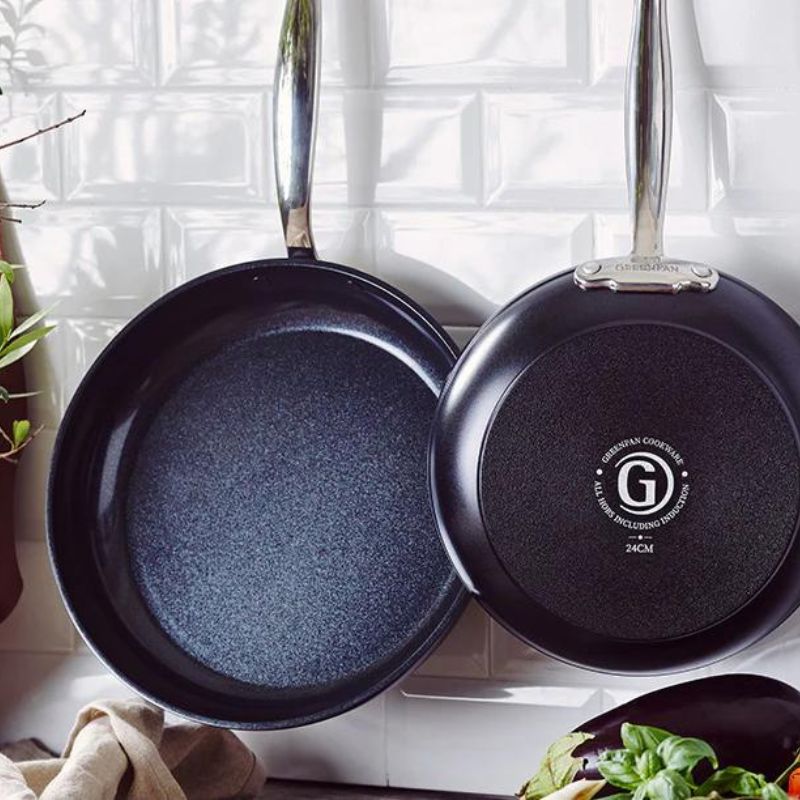
Why "Forever Chemicals" Matter
PFAS don't just disappear. They accumulate in soil, water sources, and living organisms. When traditional non-stick cookware is manufactured, these chemicals are released into the environment. When the cookware reaches the end of its life, those same chemicals persist in landfills for decades or centuries.
GreenPan was founded specifically to break this cycle – to prove that effective non-stick performance doesn't require chemicals that outlast multiple human generations.
The GreenPan Solution: Thermolon™
Thermolon™ starts with sand. This silicon-based coating is derived from minerals rather than plastics, making it the first plastic-free, PFAS-free non-stick coating available to home cooks. The coating is applied at lower temperatures than traditional non-stick manufacturing, resulting in 60% less CO2 emissions during production.
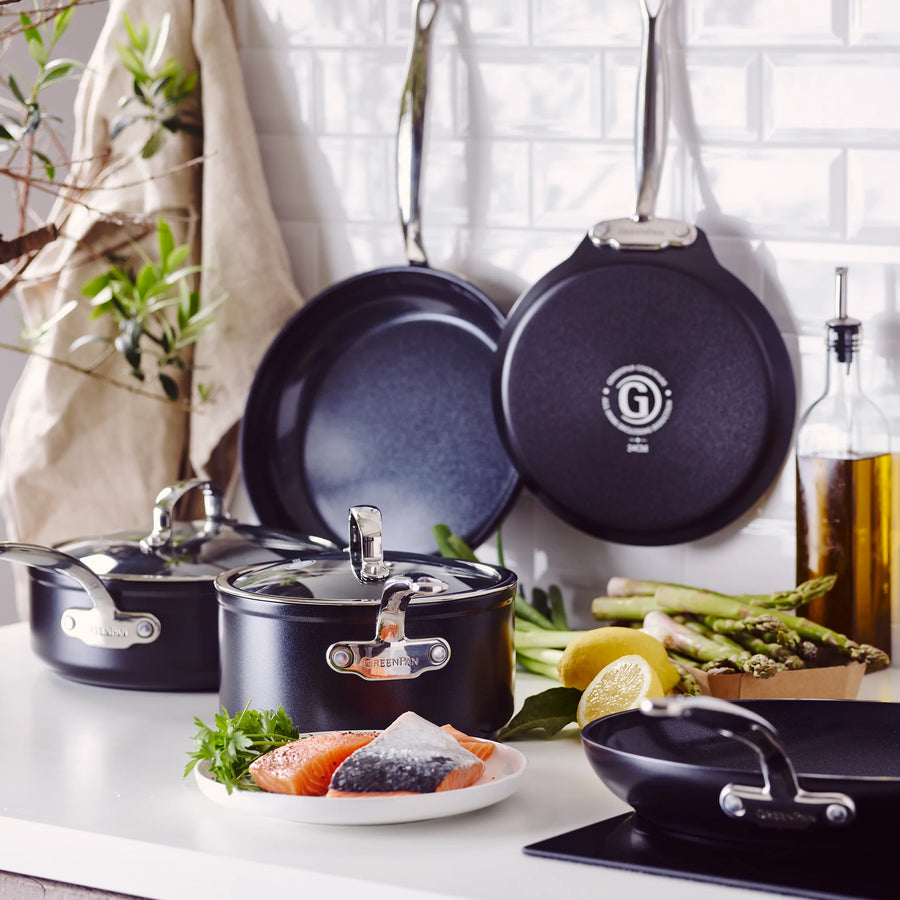
Key Advantages of Thermolon
PFAS-Free Composition
Made from sand-derived minerals instead of plastic-based chemicals. No PFOA, PFAS, lead or cadmium.
Heat Resistance
Won't release potentially harmful fumes if accidentally overheated. The coating won't blister or peel at high temperatures.
Superior Heat Distribution
Distributes heat so effectively that you can sear steak on low to medium heat – no high temperatures required.
Lower Manufacturing Impact
Applied at lower temperatures than traditional coatings, producing 60% less CO2 during manufacturing.
What Thermolon Isn't
It's important to understand that Thermolon is heat-resistant, not heat-proof. While the coating won't release harmful fumes if overheated, using temperatures above 450°F (232°C) can still damage the surface over time. The good news? The coating's efficient heat distribution means you'll never need temperatures that high for excellent cooking results.
Thermolon vs Traditional Non-Stick: The Comparison
| Feature | GreenPan Thermolon™ | Traditional PFAS Non-Stick |
|---|---|---|
| Base Material | Sand-derived minerals | Plastic-based PFAS chemicals |
| PFAS-Free | ✓ Yes | ✗ No |
| Environmental Persistence | Mineral-based, no "forever chemicals" | PFAS persist for decades/centuries |
| Manufacturing CO2 Emissions | 60% less than traditional | Baseline industry standard |
| Overheating Safety | No harmful fumes released | Can release toxic fumes above 260°C |
| Heat Distribution | Highly efficient, low-medium heat sufficient | Often requires higher temperatures |
| Coating Damage from Overheating | Won't blister or peel | Can blister, peel or degrade |
| Metal Utensil Compatibility | Soft utensils recommended (silicone, wood) | Soft utensils recommended |
| Dishwasher Safe | ✓ Yes (hand wash recommended) | Varies by manufacturer |
| Requires Oil/Butter | Optional (recommended for flavour) | Optional |
Environmental Credentials
GreenPan's commitment to sustainability extends well beyond the Thermolon coating. The company has implemented comprehensive environmental practices across their entire production process:
Recycled Materials
Every GreenPan product uses recycled aluminium in bodies and handles, reducing the environmental impact of raw material extraction.
Solar Power
Manufacturing facilities run on 30% solar energy, reducing reliance on fossil fuels for production.
Wastewater Treatment
GreenPan operates their own wastewater treatment plant, ensuring production byproducts don't contaminate local water systems.
Sustainable Packaging
Packaging uses recycled materials produced through bleach-free processes with minimal ink, reducing chemical waste.
Quality and Longevity
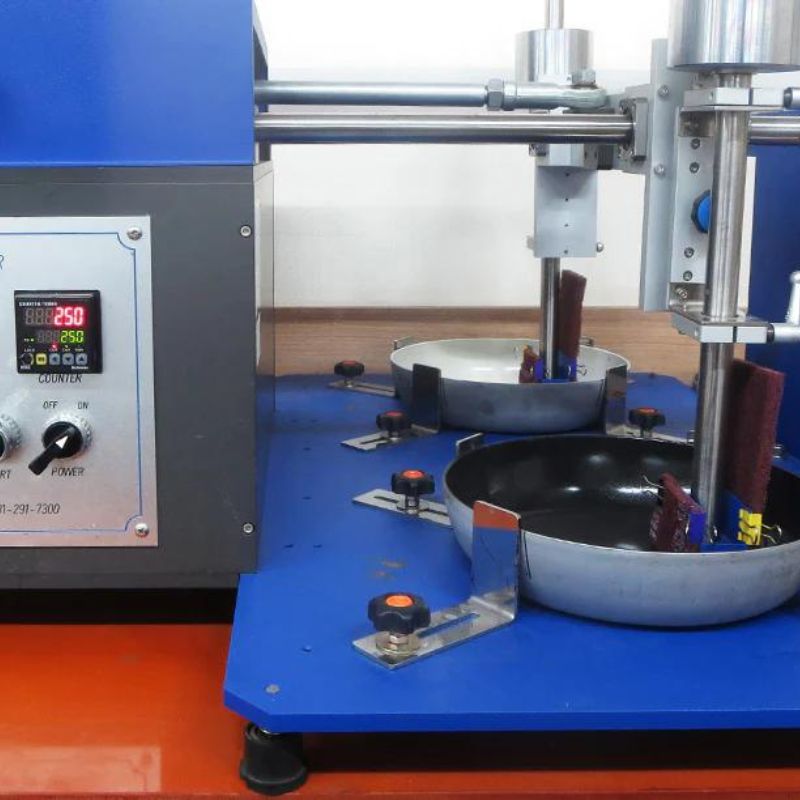
Perhaps the most environmentally responsible approach is simply making cookware that lasts. GreenPan employs 50 dedicated quality control staff and maintains an in-house testing laboratory where they compare their innovations against competitors. This commitment to quality means fewer pans in landfills – the best environmental outcome is cookware that doesn't need replacing.
Relentless Innovation
GreenPan holds over 150 patents for technological advancements designed to make cooking easier and better for everyone. Their dedicated in-house testing lab compares their innovations with other products on the market, ensuring that their technology genuinely makes their pans better.
Cooking Performance
Environmental credentials matter, but cookware ultimately needs to perform in the kitchen. GreenPan's Thermolon coating delivers several practical advantages:
Low to Medium Heat is Sufficient
The patented Thermolon coating distributes heat with exceptional efficiency. You can achieve a proper sear on steak using only low to medium heat – high temperatures simply aren't necessary. This not only extends the life of your cookware but also reduces energy consumption.
Excellent Food Release
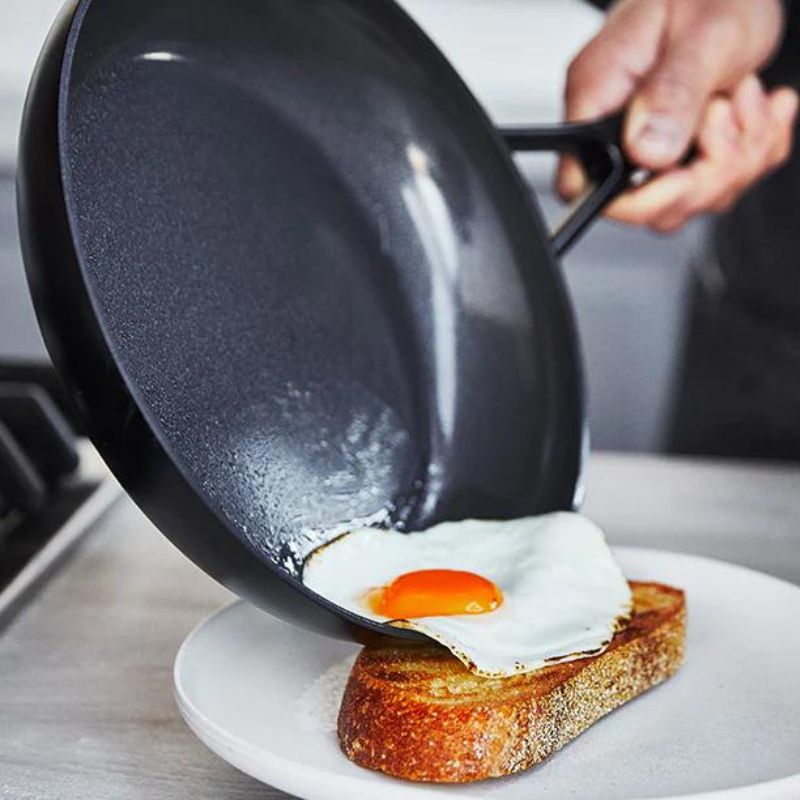
The non-stick properties work effectively without requiring oil or butter, though adding fats can enhance flavour and help with browning. The smooth ceramic surface releases food cleanly, making both cooking and cleaning straightforward.
Forged Base Construction
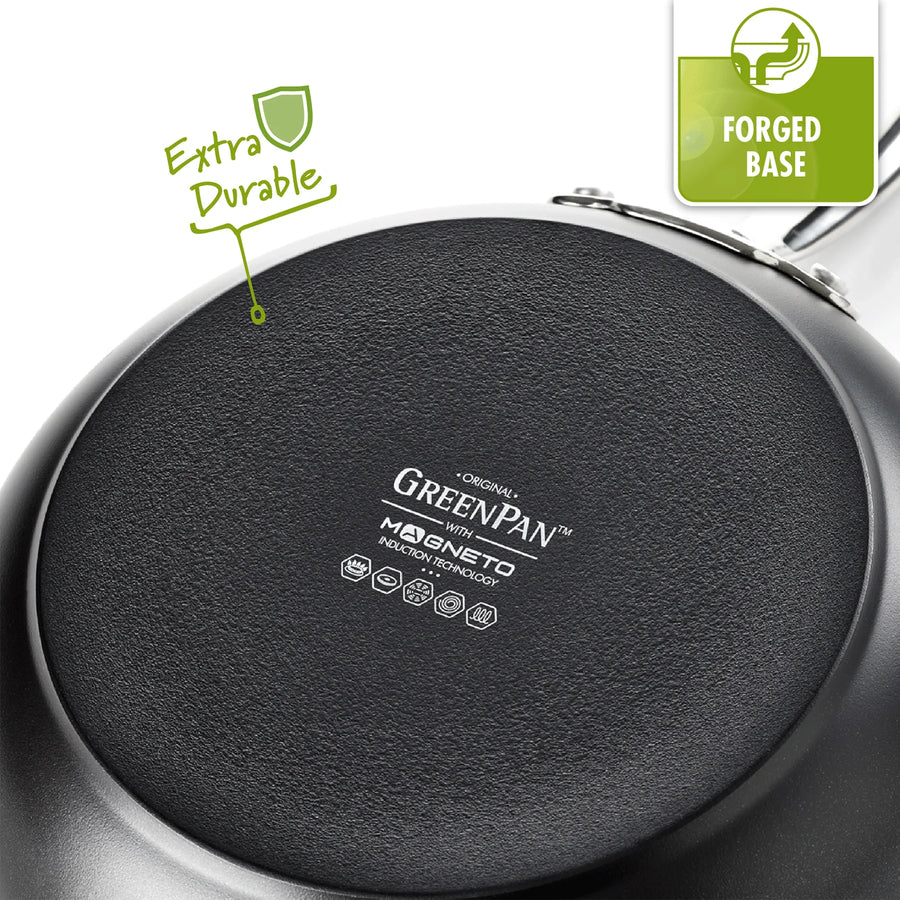
Unlike stamped cookware (where flat metal sheets are pressed into shape), GreenPan frying pans feature forged bases. These are thicker, stronger and add extra stability. This construction prevents warping during heating, ensuring even cooking results over years of use.
Glass Lid Design
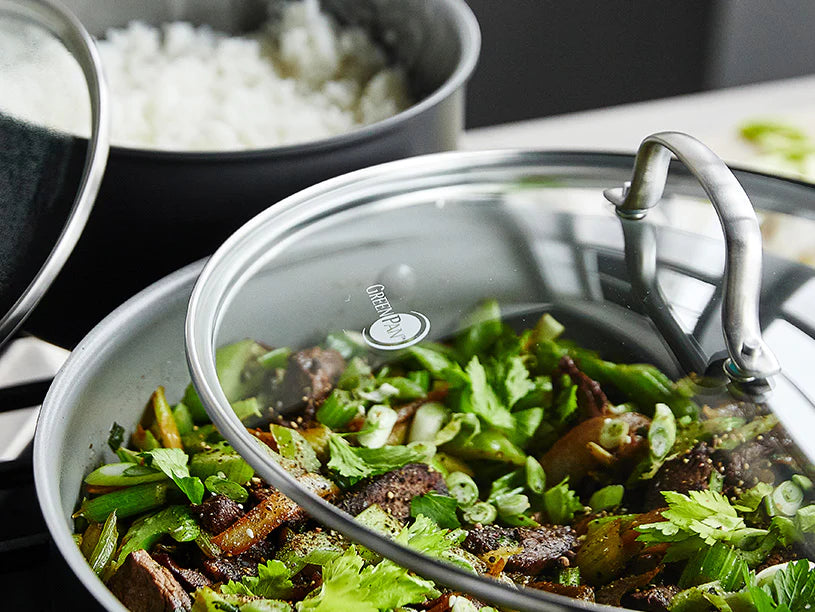
Many GreenPan ranges include tempered glass lids that are oven-safe up to 220°C. You can monitor cooking progress without lifting the lid and losing heat – particularly valuable for dishes requiring consistent temperature.
Versatile Range Options
GreenPan offers cookware in multiple materials to suit different cooking needs: hard anodised aluminium, standard aluminium, stainless steel, tri-ply stainless steel, and cast iron. Various pieces include woks, skillets, sauté pans, chef's pans, frying pans and saucepans in multiple sizes. Depending on the range, GreenPan cookware is suitable for all hob types including induction.
Care and Maintenance
Proper care ensures your GreenPan cookware delivers optimal performance for years. The ceramic coating is forgiving but benefits from appropriate treatment:
Daily Cleaning
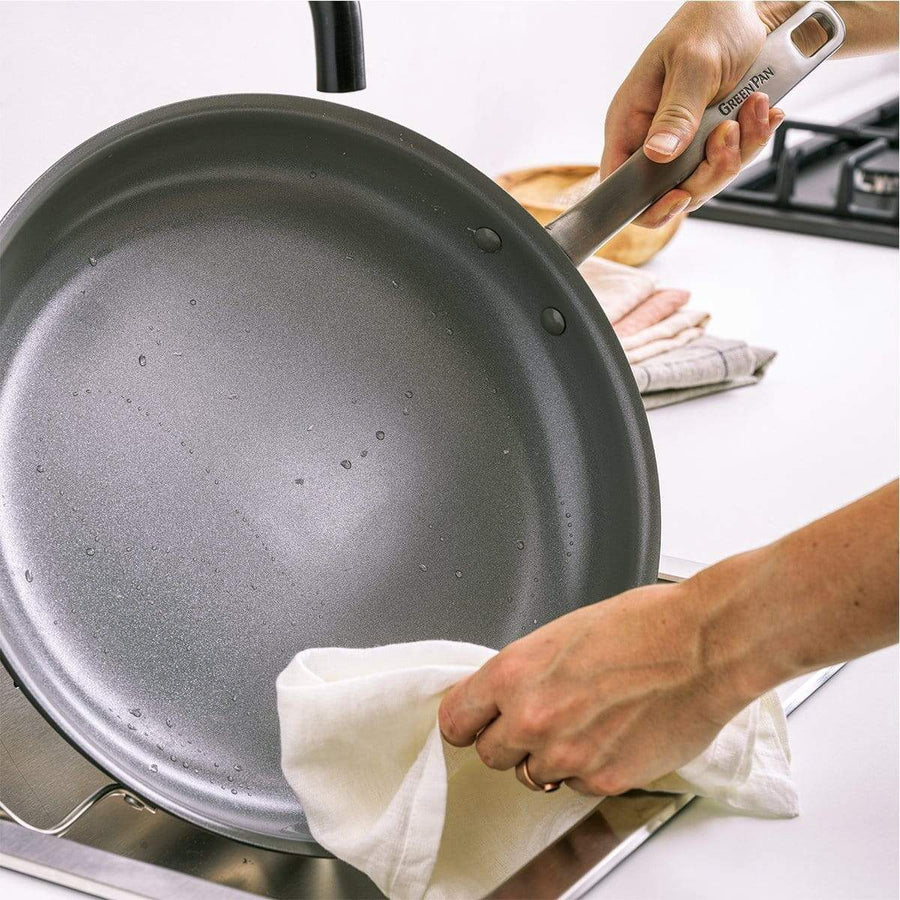
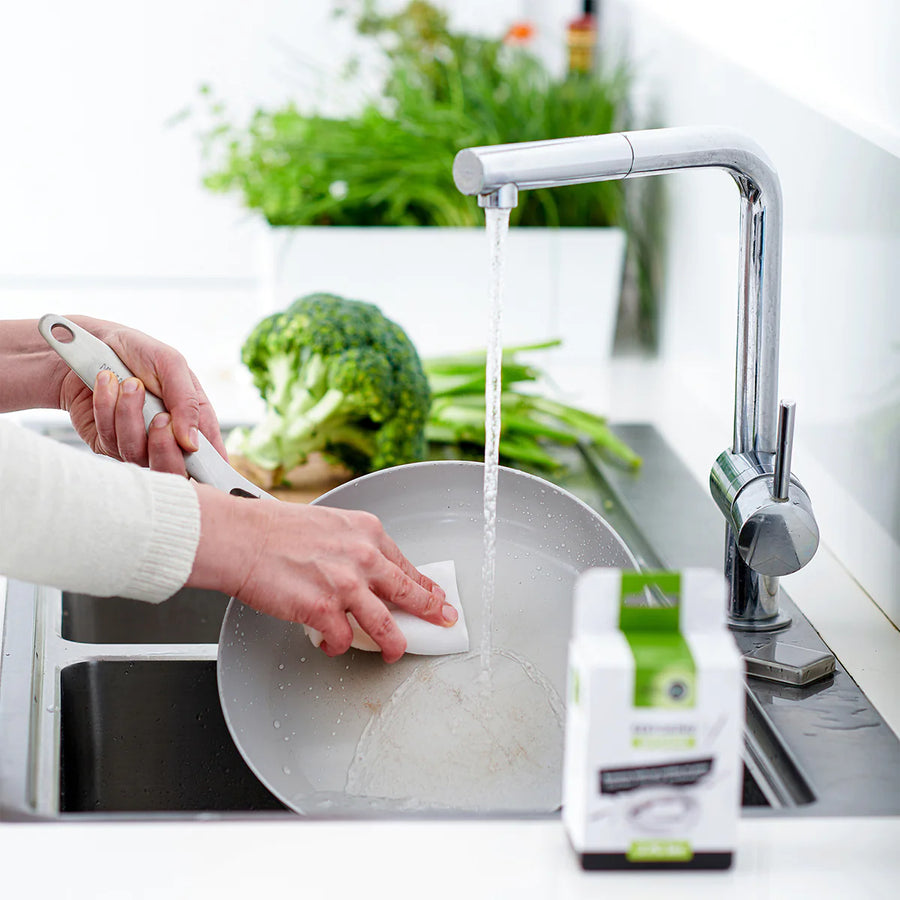
Wash with warm soapy water and a soft sponge after each use. While dishwasher safe, hand washing is recommended as dishwasher salts can gradually attack the coating.
Temperature Management
Low to medium heat is sufficient for all cooking tasks. Avoid temperatures above 450°F (232°C) as this can damage the coating over time.
Avoid Thermal Shock
Always let the pan cool before washing. Plunging hot cookware into cold water can cause warping and shatter glass lids.
Proper Utensils
Use silicone or wooden utensils. Softer tools are gentler on the coating and help it last longer.
Oil Selection
Use high-smoke point oils for higher-heat cooking. Avoid spray oils as tiny particulates heat quickly and burn, creating carbonisation.
Safe Storage
Pan protectors (cushioned pads) prevent scratches when cookware is stacked in cabinets, providing extra protection for your investment.
Dealing with Carbonisation
If sticky spots appear from oil carbonisation (a result of overheating with oils), you can restore the surface:
- Boiling Method: Fill the pan halfway with water and bring to near-boiling for 2 minutes. Pour out the water, place the pan on a sturdy surface like a wooden cutting board, and carefully use a scrubby sponge on the warm surface.
- Baking Soda Paste: Mix baking soda with a little water to form a smooth paste. Use kitchen paper to rub the paste over stained areas (exterior surfaces only).
- Cream Cleaner: Specialist products like Demeyere Cream Cleaner work excellently for stubborn marks.
⚠️ Prevention is Best
The key to avoiding carbonisation is washing thoroughly after each use. Even thin layers of oil residue will carbonise with repeated heating, gradually reducing non-stick performance. Regular cleaning with warm soapy water prevents buildup and keeps your GreenPan performing optimally.
Do's and Don'ts
- Don't use too high a heat – low to medium is all you need
- Do wash thoroughly after use to avoid fat buildup on the surface
- Do hand wash where possible – although dishwasher safe, dishwasher salt attacks the non-stick coating
- Don't use spray oils – particulates heat up quickly and burn, creating carbonisation
Why Buy from Art of Living?
We've specialized in premium cookware for over 50 years, stocking the complete GreenPan range across our three Surrey showrooms.
Ready to Make the Switch?
Explore our complete range of GreenPan PFAS-free cookware



Leave a comment